Monday, March 7, 2011
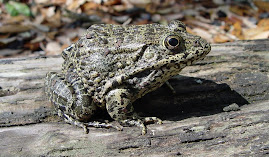
Frogging By Ear Workshop
When: 25-27 March 2011
Where: Solon Dixon Forestry Education Center, Andalusia, Alabama
Come spend a fun weekend in the longleaf with herpetologists, Jimmy and Sierra Stiles, learning all about frogs in Alabama’s frog hotspot. This region supports one of the highest frog species diversities in the United States. Participants will learn how to recognize frogs by their call and by using field marks to identify frogs in hand. Nightly field trips will tour local frogging sites for hands-on practice. Learn how to choose the best sites for listening to frogs, no matter where you are. We will demonstrate how Google Earth and other map resources can be used to identify the best spots for exploring the sounds of the night. Local frogs will be used to illustrate techniques to target species by understanding their life history, habitat and survival needs. We will present some interesting new techniques used for long-term monitoring and research as well as discuss some low-cost methods for managing your land for maximum frog diversity. Participants will have opportunities to photograph local frog species as well as some other interesting local reptiles and amphibians. The workshop will be based out of the Solon Dixon Forestry Education Center. We will be able to explore over 90,000 acres of prime frog habitat.
Workshop Schedule
Friday March 25th
2:00-5:00 Introduction to frogging, species identification, habits and habitats
5:00-5:45 Break
5:45-6:30 Dinner
6:30-9:30 Trips to local ponds
Saturday March 26th
8:00 Breakfast
9:30-12:00 GIS maps and frogs, Froglogging
12:00-12:30 Lunch
12:30-2:00 Break
2:00-5:00 Photograph, experience and investigate live reptiles and amphibians
5:00-5:45 Break
5:45-6:30 Dinner
6:30-9:30 Trips to local ponds
Sunday March 27th
8:00 Breakfast
Cost of the workshop includes all lodging, meals, and instruction
$235 for single occupancy in a room per person
$225 for double occupancy in a room per person
To register or for more information contact
Jimmy and Sierra Stiles
5687 US Hwy 29
Andalusia, Alabama 36420
334-881-0084
205-533-1407
jrstiles@earthlink.net
REGISTRATION DEADLINE 21 MARCH 2011
Monday, February 21, 2011
Opp Rattlesnake Bounty Retracted
As a follow up the previous post, you can read about how, due to concerns raised about the rattlesnake bounty, Opp retracted this policy.
Wednesday, February 9, 2011
ALAPARC Press Release: Conservation groups send letters opposing Opp Rattlesnake Rodeo

Opp, Ala. (Feb. 7, 2011) — Controversy is again brewing over the Opp Rattlesnake Rodeo.The 51st annual event will be held April 1-2 in Opp, a small city that holds just 6,500 residents.
Each year, almost 100 Eastern diamondback rattlesnakes are hunted throughout south Alabama. In the past, many were taken from gopher tortoise burrows. Those captured are placed on display for the rodeo and then killed afterward. Last year, an estimated 20,000 people flocked to Opp for the city’s biggest attraction.
However, citing declines in the Eastern diamondback’s population, some conservation groups believe the “bring ‘em back alive” component of rattlesnake roundups should end, while maintaining other aspects of the festivals. Biologist D. Bruce Means, Executive Director of the Coastal Plains Institute, published a report in 2009 using 50 years worth of data collected from roundups in Opp and three Georgia towns. His findings provide a sobering survey of the impact those events have on the species.
“Both numbers of snakes and weights of the largest snakes that participants turned in annually declined in the last two decades,” he reported. “Statements by roundup officials and rattlesnake hunters support that roundup hunting has depleted local rattlesnake populations and forced hunters to travel further to collect snakes in recent years.”
With Opp’s rodeo less than two months away, some conservation groups have sent letters to city officials urging them to end a recently enacted policy that compensates residents for capturing live snakes for the event. In an interview with the Andalusia Star News, Opp City Planner Don Childre said the city will pay $8 per foot of rattlesnake and $100 for each live unharmed snake over five feet in length. For any snakes measuring more than eight feet (this length exceeds any turned in over the past 50 years), the city will pay $1,000. Opp has paid hunters for years to capture the snakes, but many of those hunters have since quit, according to Childre. He told the newspaper that because of this, “‘we thought we’d open it up to the public.’”
The Gopher Tortoise Council (GTC), a nonprofit organization promoting conservation of gopher tortoises and other unique upland species within the Southeast, One More Generation, a nonprofit in Georgia dedicated to preserving endangered species and the environment, Ruffner Mountain Nature Center and the Alabama chapter of the Sierra Club are among the organizations pushing for the policy’s retraction. In its letter, the GTC stresses the danger in encouraging the general public to capture rattlesnakes, a potentially deadly species.
“Because of this ill-conceived request, untrained individuals inspired by monetary gain are likely to put themselves at great risk capturing, handling, and transporting rattlesnakes,” the letter states. “Although rattlesnakes are unlikely to bite unless provoked (e.g. by capture) a bite from a rattlesnake is potentially debilitating and can even be fatal.” Furthermore, the GTC states that a common practice associated with collecting rattlesnakes involves gassing tortoise burrows, which is against the law in Alabama, but difficult to enforce.
“Gassing burrows can kill or harm the other inhabitants of tortoise burrows (of which there are >360 species including the gopher tortoise, a species federally protected west of the Tombigbee River and state protected to the east),” the GTC letter states. “Tortoise burrows are also known refuges of the eastern indigo snake, a federally listed-threatened species recently reintroduced to Conecuh National Forest.”
The letter also claims that offering a bounty will encourage unregulated exploitation of rattlers. Although the roundups are not as detrimental as the habitat loss and degradation the snake encounters throughout its range, they can still impact the species’ overall numbers, according to David Steen, co-chair of the GTC.
“Concentrated collecting within a particular area is likely to result in considerable decreases in population size and in the most extreme cases, elimination of the species in that spot altogether,” he said. “Between habitat loss, road mortality, and collecting (among other factors), the Eastern Diamondback rattlesnake has to contend with many new threats; this is likely why many biologists think the species is declining overall.”
Steen believes holding an event that celebrates the snake instead of one that includes capturing and killing it will still attract the crowds Opp sees each year. “Festivals of this type are great revenue producing opportunities and can be considered part of Southern culture,” he said. “But, collecting and killing of wild animals doesn’t need to be on the schedule to retain all of that. Educational displays of captive animals will probably satisfy the vast majority of rattlesnake enthusiasts.”
He cited the San Antonio Rattlesnake Festival in San Antonio, Fla. as a prime example of this. The festival, which one newspaper estimated draws more than 30,000 people, offers snake and reptile exhibits, as well as other educational programs concerning the environment. In its letter, the GTC told Opp officials that it would be interested in participating and promoting similar educational activities at future festivals.
For a copy of Means’ study on rattlesnake roundups, visit http://www.herpconbio.org/Volume_4/Issue_2/Means_2009.pdf.
Each year, almost 100 Eastern diamondback rattlesnakes are hunted throughout south Alabama. In the past, many were taken from gopher tortoise burrows. Those captured are placed on display for the rodeo and then killed afterward. Last year, an estimated 20,000 people flocked to Opp for the city’s biggest attraction.
However, citing declines in the Eastern diamondback’s population, some conservation groups believe the “bring ‘em back alive” component of rattlesnake roundups should end, while maintaining other aspects of the festivals. Biologist D. Bruce Means, Executive Director of the Coastal Plains Institute, published a report in 2009 using 50 years worth of data collected from roundups in Opp and three Georgia towns. His findings provide a sobering survey of the impact those events have on the species.
“Both numbers of snakes and weights of the largest snakes that participants turned in annually declined in the last two decades,” he reported. “Statements by roundup officials and rattlesnake hunters support that roundup hunting has depleted local rattlesnake populations and forced hunters to travel further to collect snakes in recent years.”
With Opp’s rodeo less than two months away, some conservation groups have sent letters to city officials urging them to end a recently enacted policy that compensates residents for capturing live snakes for the event. In an interview with the Andalusia Star News, Opp City Planner Don Childre said the city will pay $8 per foot of rattlesnake and $100 for each live unharmed snake over five feet in length. For any snakes measuring more than eight feet (this length exceeds any turned in over the past 50 years), the city will pay $1,000. Opp has paid hunters for years to capture the snakes, but many of those hunters have since quit, according to Childre. He told the newspaper that because of this, “‘we thought we’d open it up to the public.’”
The Gopher Tortoise Council (GTC), a nonprofit organization promoting conservation of gopher tortoises and other unique upland species within the Southeast, One More Generation, a nonprofit in Georgia dedicated to preserving endangered species and the environment, Ruffner Mountain Nature Center and the Alabama chapter of the Sierra Club are among the organizations pushing for the policy’s retraction. In its letter, the GTC stresses the danger in encouraging the general public to capture rattlesnakes, a potentially deadly species.
“Because of this ill-conceived request, untrained individuals inspired by monetary gain are likely to put themselves at great risk capturing, handling, and transporting rattlesnakes,” the letter states. “Although rattlesnakes are unlikely to bite unless provoked (e.g. by capture) a bite from a rattlesnake is potentially debilitating and can even be fatal.” Furthermore, the GTC states that a common practice associated with collecting rattlesnakes involves gassing tortoise burrows, which is against the law in Alabama, but difficult to enforce.
“Gassing burrows can kill or harm the other inhabitants of tortoise burrows (of which there are >360 species including the gopher tortoise, a species federally protected west of the Tombigbee River and state protected to the east),” the GTC letter states. “Tortoise burrows are also known refuges of the eastern indigo snake, a federally listed-threatened species recently reintroduced to Conecuh National Forest.”
The letter also claims that offering a bounty will encourage unregulated exploitation of rattlers. Although the roundups are not as detrimental as the habitat loss and degradation the snake encounters throughout its range, they can still impact the species’ overall numbers, according to David Steen, co-chair of the GTC.
“Concentrated collecting within a particular area is likely to result in considerable decreases in population size and in the most extreme cases, elimination of the species in that spot altogether,” he said. “Between habitat loss, road mortality, and collecting (among other factors), the Eastern Diamondback rattlesnake has to contend with many new threats; this is likely why many biologists think the species is declining overall.”
Steen believes holding an event that celebrates the snake instead of one that includes capturing and killing it will still attract the crowds Opp sees each year. “Festivals of this type are great revenue producing opportunities and can be considered part of Southern culture,” he said. “But, collecting and killing of wild animals doesn’t need to be on the schedule to retain all of that. Educational displays of captive animals will probably satisfy the vast majority of rattlesnake enthusiasts.”
He cited the San Antonio Rattlesnake Festival in San Antonio, Fla. as a prime example of this. The festival, which one newspaper estimated draws more than 30,000 people, offers snake and reptile exhibits, as well as other educational programs concerning the environment. In its letter, the GTC told Opp officials that it would be interested in participating and promoting similar educational activities at future festivals.
For a copy of Means’ study on rattlesnake roundups, visit http://www.herpconbio.org/Volume_4/Issue_2/Means_2009.pdf.
Friday, November 19, 2010
Alabama Amphibian Network reaches 2,000 student mark
A treefrog perches on a PVC treefrog shelter near a wetland at Ruffner Mountain Nature Center (photo courtesy Nick Bieser)
As of November 2010, over 2,000 students and other members of the public have participated in the Alabama Amphibian Network (AAN) at environmental education centers across Alabama. The AAN is a collaborative citizen science partnership between Alabama Partners in Amphibian and Reptile Conservation, the University of Alabama, and seven environmental education centers across the state. The project has been made possible via funding from Legacy Partners in Environmental Education. The AAN was officially launched this summer.
Participants in the AAN are using coverboards and PVC treefrog shelters - two types of equipment used by herpetologists to sample amphibians in the field - to learn about amphibian ecology and gain hands-on experience with amphibians. EE partners in the network currently include McDowell Environmental Center, Jacksonville State University's Little River Canyon Field School, Turtle Point Science Center, the Alabama Wildlife Federation's Alabama Nature Center, Ruffner Mountain Nature Center, the University of Alabama Arboretum, and the Birmingham Botanical Gardens.
Amphibians represent one of the planet's most threatened vertebrate groups, with up to one third of all species considered threatened with extinction by international conservation organizations. Another third of all amphibian species lack the basic scientific information necessary for determining their current status. The AAN is seeking to alleviate both of these problems in Alabama by increasing public awareness of amphibians and providing biologists with information on amphibians' distribution, ecology, and status across the state. Alabama is located in a world hotspot of amphibian diversity, making it a perfect location for the project.
Besides the 2,000 people already exposed to amphibians by the project, the AAN has also yielded a potentially new scientific discovery. Participating staff at Camp McDowell have observed unique, undocumented behavior in the Slimy Salamander (Plethodon glutinosus), one of Alabama's most common amphibian residents. This observation is currently being prepared for publication.
Be sure to stay abreast of ongoing developments in the Alabama Amphibian Network by checking out the ALAPARC blog and the AAN website, which will be updated soon.
Saturday, November 6, 2010
Live Blogging our Meeting
We've completed the submitted talks for the year and have been caught up on all the work people have been conducting in the last year. We also heard Sean Graham's seminar on the outcomes of the ALAPARC hellbender initiative. Unfortunately, all the surveys of the last few years have failed to produce a single hellbender. Sean suggested although there may be a couple old individuals left in the state, it's unlikely the species has much of a future. Wally Smith also updated us on the education and outreach efforts our chapter has been involved in, we suggest you check out our website for more information.
Chris Thawley is now describing how anyone can collect information that will help researchers study the genetic make-up of amphibians and reptiles.
Saturday AM at the ALAPARC Meeting
We kick off our agenda shortly with a talk by Ken Marion at UAB about how the recent oil spill in the Gulf of Mexico has affected marine reptiles and we'll be hearing later about a dozen other talks about amphibian and reptile conservation in the state. Last night we enjoyed libations during our poster session and this morning we are waking up with coffee provided by Higher Ground Roasters. Hopefully, you're here, everybody else is.
Friday, November 5, 2010
Live Blogging Our Meeting
Hi all,
We will periodically update you with the progress for our meeting. Our panel discussion is underway and we're currently hearing insights as to how the general public and landowners may react should the Gopher Tortoise be federally protected. Joe McGlincy of Southern Forestry Consultants, Inc., is describing how private landowners possess much of the remaining tortoise habitat in Alabama and it's important to communicate with them how to effectively conserve the species while preserving their ability to profit from their land.
Jessica Homyack of Weyerhaeuser is reinforcing the importance of private lands, 84% of appropriate tortoise habitat in the range where the species is proposed for listing is on private property.
There's still time for you to make it down!
We will periodically update you with the progress for our meeting. Our panel discussion is underway and we're currently hearing insights as to how the general public and landowners may react should the Gopher Tortoise be federally protected. Joe McGlincy of Southern Forestry Consultants, Inc., is describing how private landowners possess much of the remaining tortoise habitat in Alabama and it's important to communicate with them how to effectively conserve the species while preserving their ability to profit from their land.
Jessica Homyack of Weyerhaeuser is reinforcing the importance of private lands, 84% of appropriate tortoise habitat in the range where the species is proposed for listing is on private property.
There's still time for you to make it down!
Subscribe to:
Comments (Atom)